Introduction: Drowning in Data, Starving for Insights
Every single day, global enterprise hospitality brands are hit by a tidal wave of information.
Every single day, global enterprise hospitality brands are hit by a tidal wave of information. Thousands of post-stay surveys land in corporate databases. Hundreds of Online Travel Agency (OTA) reviews hit platforms like TripAdvisor and Booking.com. Social media tags flag your flagship locations, and direct guest messages pile up across property management systems.
By all traditional metrics, your organization is a data powerhouse.
Yet, despite this massive influx of information, a frustrating reality persists for Chief Experience Officers (CXOs): brand standards remain stagnant, frontline service delivery is inconsistent, and guest satisfaction scores fluctuate unpredictably.
This is the Enterprise Data Paradox: large hotel brands are drowning in enterprise guest feedback, yet they are starving for actionable operational insights.
The harsh reality is that enterprise brands do not have a data collection problem. They have an action problem. In an industry where guest expectations rise daily, simply hoarding feedback is no longer a competitive advantage. The real winners are the brands that can turn massive, fragmented datasets into immediate, systemic operational change.
The Root Cause: Why Legacy Hospitality Data Analytics Are Failing You.
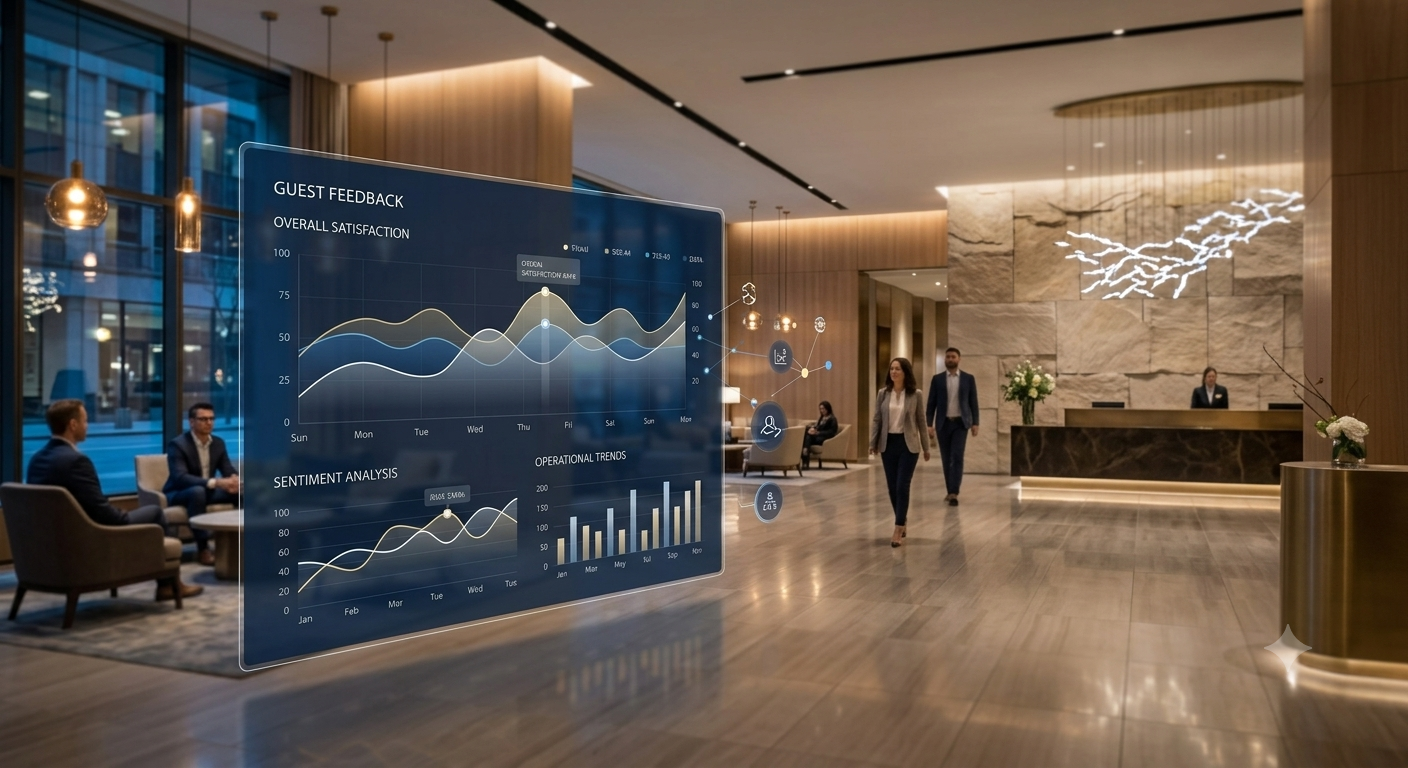
To understand how to fix the paradox, we must look at the traditional tools enterprise brands rely on. Most legacy customer satisfaction (CSAT) platforms were built over a decade ago. At their core, they are simple aggregators designed to collect data, categorize it into basic buckets, and display it on a static corporate dashboard.
While these tools look impressive in a quarterly board meeting, they fail fundamentally in day-to-day operations. They excel at showing what happened, but they completely fail to explain why it happened, or how to fix it across a global portfolio.
The Legacy Trap: Imagine your corporate dashboard flags an alert: “Cleanliness scores in the EMEA region fell by 4% last month.” As a VP of Guest Relations or Regional Director, what is your next move? A 4% drop is alarming, but the data ends there.
- Is it a housekeeping staffing shortage in Paris?
- Is it a broken commercial laundry vendor contract in London?
- Is it outdated room hardware in Dubai?
Because legacy tools only show high-level aggregates, corporate leaders are forced to guess, launch time-consuming internal investigations, or do nothing at all because the data is too vague to act upon. This stagnation directly harms your guest experience ROI.
Step 1: Shift from Static Aggregation to AI Guest Sentiment Analysis
To break the paradox and improve hotel guest satisfaction at scale, enterprises must move away from static charts and embrace advanced, AI-driven guest sentiment analysis for hospitality.
Traditional keyword tagging might flag the word “room,” but it completely misses the operational context. Modern guest intelligence reads feedback like a human would, mapping complex operational blind spots across thousands of keys simultaneously.
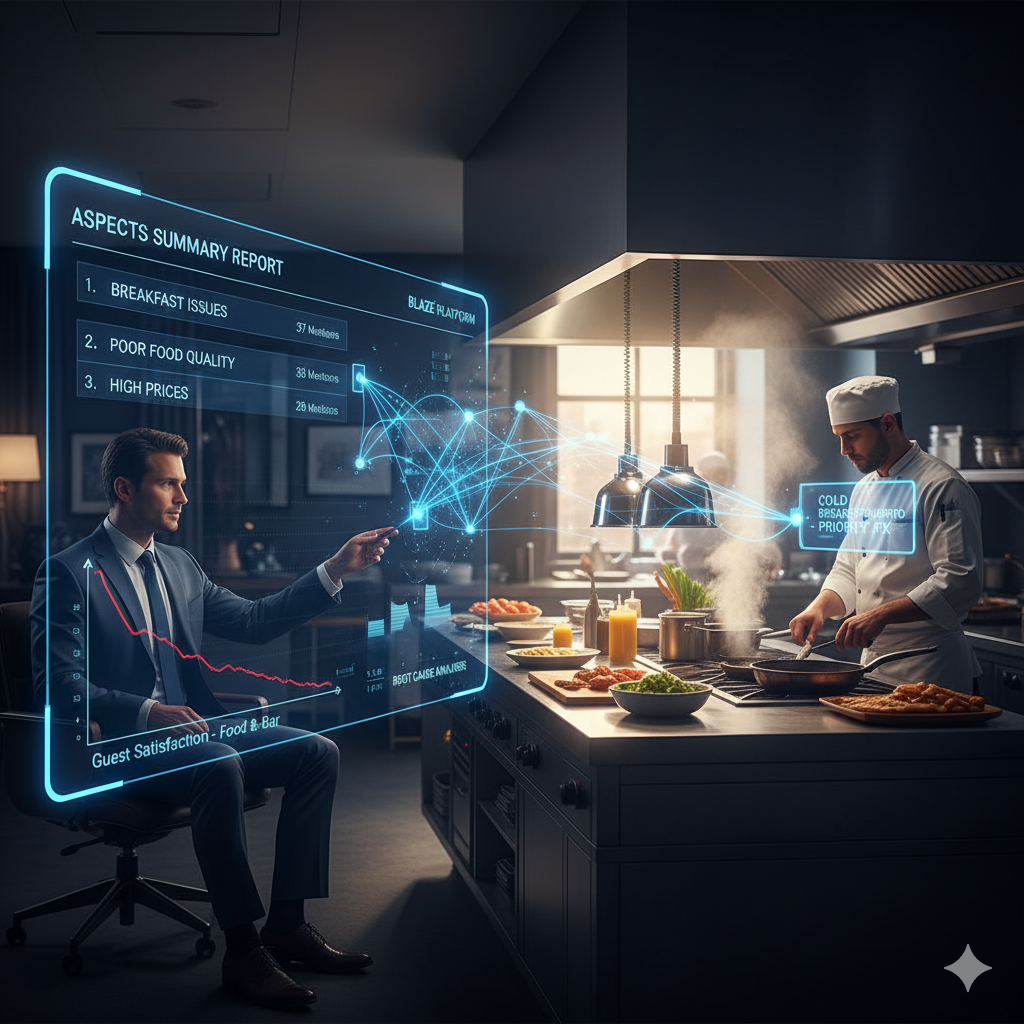
Instead of seeing a generic “4% drop in cleanliness,” advanced intelligence scans text across survey forms, Google reviews, and internal messaging to reveal the root cause: “Guests across four primary EMEA properties are consistently complaining about damp carpets and delayed check-ins due to room readiness.”
Suddenly, the vague metric becomes a highly specific operational directive. By leveraging semantic AI, corporate teams can instantly identify whether a dip in satisfaction is an isolated property issue or a systemic brand standard flaw that requires a regional pivot.
Step 2: Bridge the Gap Between Executive Dashboards and Frontline Staff
One of the greatest operational disconnects in enterprise hospitality is the gap between the corporate office and the property floor. Executives look at macro trends and rolling annual averages. Frontline staff—the general managers, front desk agents, and executive housekeepers—live in a world of 24-hour operational cycles.
If your guest feedback data stays trapped behind an executive login portal, it cannot drive hotel operational efficiency. To make a lasting impact, high-level insights must be automatically translated into tactical, localized actions.
The Operational Blueprint
- Automated Alerting: When a critical piece of negative feedback hits a threshold, the system shouldn’t just send an email; it should automatically trigger a workflow task.
- Contextualized Checklists: Convert regional data trends into concrete daily checklists for property General Managers. If the data shows a rising trend in breakfast complaints regarding long lines, the GM’s morning dashboard should automatically prioritize breakfast workflow auditing.
- Closing the Loop: Frontline teams must have an easy way to log when an operational fix has been deployed, allowing corporate to track the direct correlation between operational changes and subsequent score recoveries.
Step 3: Weaponize Your “Time-to-Resolution”
In the enterprise sector, scale is your biggest challenge, but speed is your greatest weapon. True competitive advantage doesn’t come from owning the most data—it comes from having the shortest possible time window between receiving a piece of feedback and fixing the underlying operational issue.
| Metric | Traditional Enterprise Approach | Agile Data-Driven Enterprise |
| Data Collection | Fragmented across 4-5 legacy tools | Consolidated into a single intelligence layer |
| Insight Window | Monthly or quarterly reviews (Reactive) | Real-time sentiment tracking (Proactive) |
| Action Plan | Top-down corporate mandates (Slow) | Automated, property-level workflows (Fast) |
| Business Impact | Stagnant brand scores, rising churn | Rising guest lifetime value, optimized operations |
When you reduce your time-to-resolution from weeks to hours, the guest experience transforms. A guest complaining about a slow Wi-Fi network on a Tuesday review shouldn’t result in an IT overhaul next quarter; it should trigger a hardware check by the property maintenance team by Wednesday morning.
Conclusion: Transform Your Guest Data Into a Competitive Weapon
The enterprise brands that will dominate the next decade are not those with the biggest survey budgets. They are the ones that view guest feedback not as a report card to be filed away, but as a dynamic, real-time operating system.
By shifting from passive data aggregation to active operational intelligence, breaking down the walls between corporate and frontline staff, and obsessing over your time-to-resolution, you can finally solve the Enterprise Data Paradox. Stop collecting data for the sake of metrics. Start weaponizing it to drive flawless execution at every single property, every single day.
Ready to Turn Guest Feedback into Operational Action?
Don’t let valuable guest insights sit idle on a dashboard while your competitor wins the market. Discover how our enterprise-grade guest intelligence platform automates workflows, connects corporate vision to frontline execution, and measurably improves your brand’s bottom line.